Biophilic design and sustainable brands
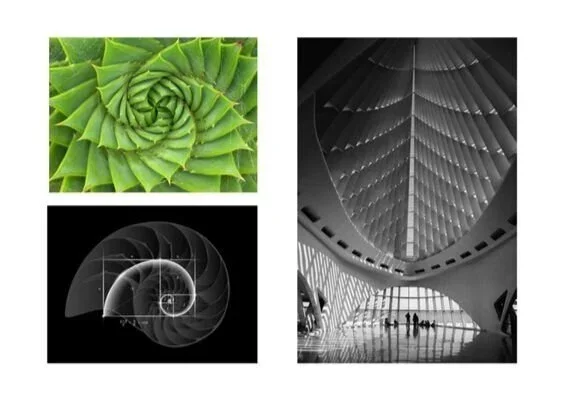
Biophilia (meaning love of nature) focuses on human's innate attraction to nature and natural processes.
Biophilia is humankind’s innate biological connection with nature. Biophilic design can reduce stress, enhance creativity and clarity of thought, improve our well-being and expedite healing; as the world population continues to urbanize these qualities are ever more important. Created by theorists, research scientists, and design practitioners , “14 Patterns of Biophilic Design” (see below) articulates the relationships between nature, human biology and the design of the built environment so that we may experience the human benefits of biophilia in our design applications. Created to nurture well-being in the built environment, the 14 patterns of biophilic design can be applied to branding by employing its’ design considerations. We’ve handpicked and adapted them for our branding frameworks ™:
1. Identifying desired responses and outcomes
It is vital for a designer to understand a project’s design intent – What are the health or performance priorities of the intended users? To identify design strategies and interventions that restore or enhance well-being, project teams should understand the health baseline or performance needs of the target population (eg. guided by the SDGs) . One approach is to ask: what is the most biophilic space we can conceivably design? In case of digital design, another is to ask: how can biophilic design improve performance metrics already used by the client? As many biological and psychological responses to design occur together (e.g., reducing physiological indicators of stress and improving overall mood), and there are countless combinations of design patterns and interventions, understanding priorities will help focus the design process.
2. Diversity of design strategies
Patterns in combination tend to increase the likelihood of perceived benefits of an online space. Incorporating a diverse range of design strategies can accommodate the needs of various user groups from differing cultures and demographics and create an environment that is psycho-physiologically and cognitively restorative. However, adding multiple biophilic strategies for the sake of diversity may backfire unless they are integrative and supporting a unified design intent.
3. Interdisciplinary planning and design
Developing an interdisciplinary strategy early on in a project will help ensure cost-effective opportunities are not lost before they are even fully considered. Biophilia is but one piece of the puzzle to creating a vibrant, sustainable, and restorative environment. The integration of a multi-disciplinary strategy in the early stages of development – through a stakeholder charrette process or similar – will put team members on equal footing and allow for the identification of potential strengths, challenges and opportunities. In the long run, this approach will improve project satisfaction and save money.
4. Biophilia as an environmental quality
Environmental quality is an umbrella term that refers to the sum of the properties and characteristics of a specific environment and how it affects human beings and other organisms within its zone of influence. Biophilia, like air quality, thermal comfort and acoustics, is an essential component of environmental quality that expands the conversation from daylight, materials toxicity, and air, water and soil quality, to include human biological health and well-being.
*One of the cultural challenges to upholding that human-nature bond, as well as environmental stewardship, is a phenomenon known as Environmental Generational Amnesia, the shifting baseline for what is considered a normal environmental condition as it continues to degrade. As environmental degradation continues, the baseline continues to shift with each ensuing generation, each perceiving this degraded condition as the norm or non-degraded condition. This shifting baseline varies across cultures, geographic regions and sub-groups (Kahn, 2009), influencing environmental stewardship, proximity and access to nature and the biophilic experience. Helping a community to understand what their home looked like when it was a healthy, intact ecosystem is one way of making a Connection with Natural Systems and will hopefully help foster and frame the importance of other areas of environmental quality.
When integral to the environmental quality discussion, biophilia may also help dissolve the perceived division between human needs and building performance. And we would be remiss not to acknowledge that back-of-house and night shift workers are often the most deprived of biophilic experiences, while they are also the very people responsible for monitoring and maintaining building performance standards. From a branding perspective, biophilic design patterns have the potential to refocus the designer’s attention on the links between people, health, high-performance design and aesthetics.
14 PATTERNS OF BIOPHILIC DESIGN
(William Browning, Catherine Ryan, Joseph Clancy, 2014)
Nature in the Space Patterns 1. Visual Connection with Nature 2. Non-Visual Connection with Nature 3. Non-Rhythmic Sensory Stimuli 4. Thermal & Airflow Variability 5. Presence of Water 6. Dynamic & Diffuse Light 7. Connection with Natural Systems Natural Analogues Patterns 8. Biomorphic Forms & Patterns 9. Material Connection with Nature 10. Complexity & Order Nature of the Space Patterns 11. Prospect 12. Refuge 13. Mystery 14. Risk/Peril
THE STORY OF OUR BIOPHILIC LOGO
The Fibonacci sequence embodies the idea of a space with biomorphic forms and patterns (Nature Analogues Patterns #8) that feel interesting and comfortable, possibly captivating, contemplative or even absorptive. While our brain knows that biomorphic forms and patterns are not living things, we may describe them as symbolic representations of life (Vessel, 2012).
Form/Function • Arrangement of the structural system (brand - business - behavior)
